
Borobudur Temple Facts and History: A Guide to Its Ancient Heritage

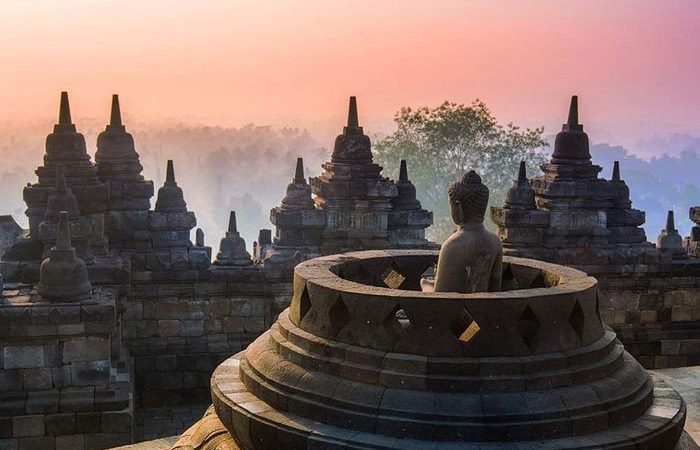
Learning about Borobudur Temple facts and history gives travelers a deeper understanding of one of Indonesia’s most important ancient monuments. Borobudur combines Buddhist traditions, ancient Javanese craftsmanship, detailed stone reliefs, and distinctive architectural forms. Its long history also includes periods of decline, rediscovery, restoration, and continued preservation.
Borobudur Was Built in Ancient Java
Borobudur was constructed in Central Java during the ancient Javanese period. Its development is generally associated with the Sailendra Dynasty and the Buddhist traditions that flourished in the region.
Building the monument required careful planning and skilled craftsmanship. Workers shaped and arranged volcanic stone to create terraces, galleries, stairways, statues, and stupas.
The scale of Borobudur demonstrates the considerable architectural knowledge available in Java many centuries ago.
The Monument Has a Buddhist Foundation
One of the key Borobudur Temple facts and history points is its connection with Buddhism. The monument was designed with Buddhist concepts reflected in its architecture and artwork.
Visitors move through different levels as they explore the site. The lower galleries contain extensive reliefs and Buddha statues, while the upper circular platforms feature rows of stupas.
The gradual movement toward the summit creates a physical journey through the monument.
Its Reliefs Contain Many Details
Borobudur contains thousands of carved relief panels. These scenes include Buddhist narratives as well as depictions of people, animals, buildings, plants, transportation, and other aspects of life.
The reliefs are carved directly into the stone surfaces, making them an integrated part of the architecture.
Visitors who take time to examine individual panels can explore many small details that are easy to overlook during a short visit.
For travelers who want to explore more information about Borobudur’s history, architecture, Buddhist meaning, and interesting details, this Borobudur facts guide provides a broader overview.
Borobudur Has Square and Circular Sections
Another notable feature is the combination of square and circular architectural forms.
The lower levels contain square terraces surrounded by galleries. Above them are three circular platforms with rows of perforated stupas.
This change in shape creates a clear visual transition as visitors climb higher. The detailed lower galleries contrast with the more open upper platforms.
The Monument Experienced a Long Period of Decline
Borobudur eventually became less active and was gradually affected by natural conditions. Vegetation grew around sections of the monument, while weather and other environmental factors affected the stonework.
Over time, the site became less visible and less widely known.
Its later rediscovery began an important new chapter in the monument’s history.
Restoration Helped Protect Borobudur
Modern preservation efforts have played an important role in maintaining Borobudur. Conservation work has focused on protecting the stone structure, reliefs, terraces, statues, and stupas.
These efforts have helped preserve the monument while allowing visitors to continue exploring its architectural and artistic features.
Preservation remains essential because an ancient structure requires careful management to protect it from environmental and visitor-related pressures.
Borobudur Remains a Cultural Landmark
Today, Borobudur continues to attract visitors interested in Buddhist heritage, Indonesian history, ancient architecture, and cultural tourism.
Travelers who want to visit Borobudur and other destinations around Central Java can also explore Borobudur Tours.
The combination of Borobudur Temple facts and history shows why the monument remains fascinating. Its ancient construction, detailed reliefs, Buddhist symbolism, distinctive architecture, and long preservation journey create a cultural legacy that visitors can experience directly.
